Is my child where they should be?
When do they start counting? When do they recognize the letters?
Every child develops at their own pace. The things I collected here are only approximate, there’s no need to worry if someone starts earlier or later — it’s completely normal.
Around 1 year old: The first big steps
During this period, babies go through huge development. They learn to roll over, crawl, climb, and then pull themselves up while holding on. The first uncertain steps also appear around this time.
They start saying their first words like “mama” or “dada,” and use gestures to show what they want.
They are very interested in sounds, lights, and everything that moves. They love when people talk to them, tell them stories, and they pay more and more attention to familiar faces and voices.
1–2 years old: The explorer phase
Walking becomes more confident, the child tries to run, climb, and go up and down small play structures. They are constantly on the move, want to touch and try everything.
Speech develops rapidly: they know more and more words and sometimes already say two-word sentences (“mommy comes”, “don’t want”).
They start to imitate: feeding the doll, sweeping, cooking — as if copying the adult world.
The “no” phase also appears, when they start testing boundaries and want to be more and more independent.
2–3 years old: Little talkers and big independence
During this period, children can already run, jump, throw a ball, and like to eat or dress on their own. Their fine motor skills also improve: they draw, scribble, and build.
Speech becomes much more complete: they communicate in simple sentences, ask questions (“What’s this?”, “Where is it?”), and start repeating songs, short poems, and rhymes.
They become more interested in other children, start playing together, and learn to share and wait for their turn.
At this age, children are already real little personalities – curious, funny, and full of energy.
3–4 years old: The first discoveries
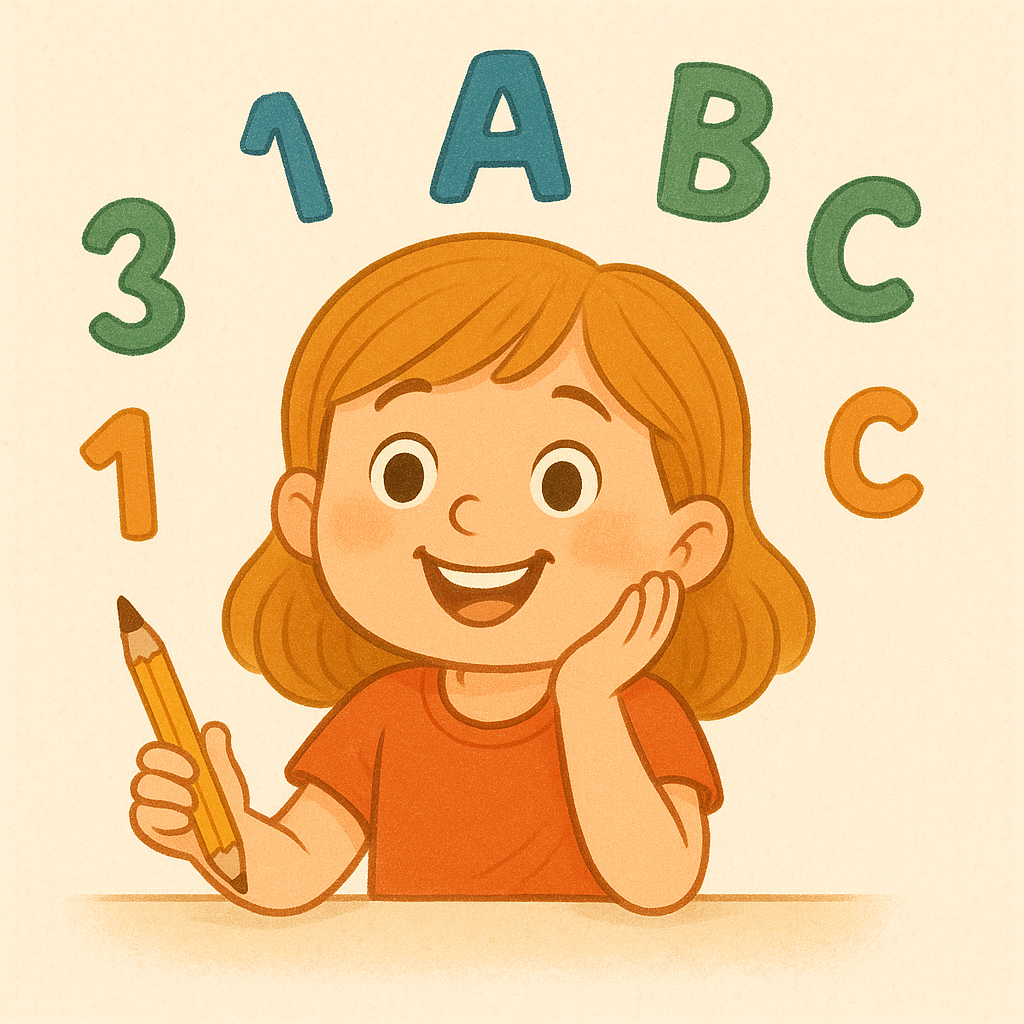
At this age, children start to show interest in colors and shapes. They often already count to five, though this is more like singing or play than real number understanding. They recognize some letters, especially those from their own name.
Simple structured games – like puzzles or matching activities – bring them great joy. At this age they absorb everything easily, and they start kindergarten where they also learn many fun and useful things.
5–6 years old: Getting ready for school
By now they can usually count to ten and start to feel what numbers really mean.
They begin copying letters, scribbling their names, and their hand–eye coordination improves.
They enjoy games where they can put letters in order or follow lines. There are many kinds of activity books available where they learn to draw lines and shapes — it’s worth starting these at this age to make learning letters even smoother once they start school.
6–7 years old: School starters
In first grade, they learn all the letters and begin to read short words and sentences. They count to twenty and already practice simple addition and subtraction.
They like games that involve organizing, sequencing, or paying attention to small details.
This is a great time to start family board game nights, which are exciting family activities and also great for learning.
7–8 years old: Becoming more independent
By this age, children read more confidently and start getting familiar with multiplication. They enjoy logical and thinking games and love challenges.
They are no longer only motivated by winning, but also by the joy of solving problems itself.
8–9 years old: Little explorers
At this stage, children can already read short stories independently, practice multiplication tables, and get to know division.
They become more and more curious about how the world works and ask endless questions.
Puzzles, strategy, and logic games become their real favorites — they give both challenge and a sense of achievement.