Home Safety for Little Ones – Tips from the Heart, Based on Experience
When a baby arrives, everything changes. In an instant, you start seeing your home with completely new eyes: what used to seem harmless suddenly looks full of hidden dangers. The edge of the coffee table, the power outlet, the hanging tablecloth – all those little things you never noticed before. A child’s curiosity is endless, and that’s a wonderful thing, because it’s how they discover the world. But for a parent, every new discovery can make your heart skip a beat as you try to keep them safe.
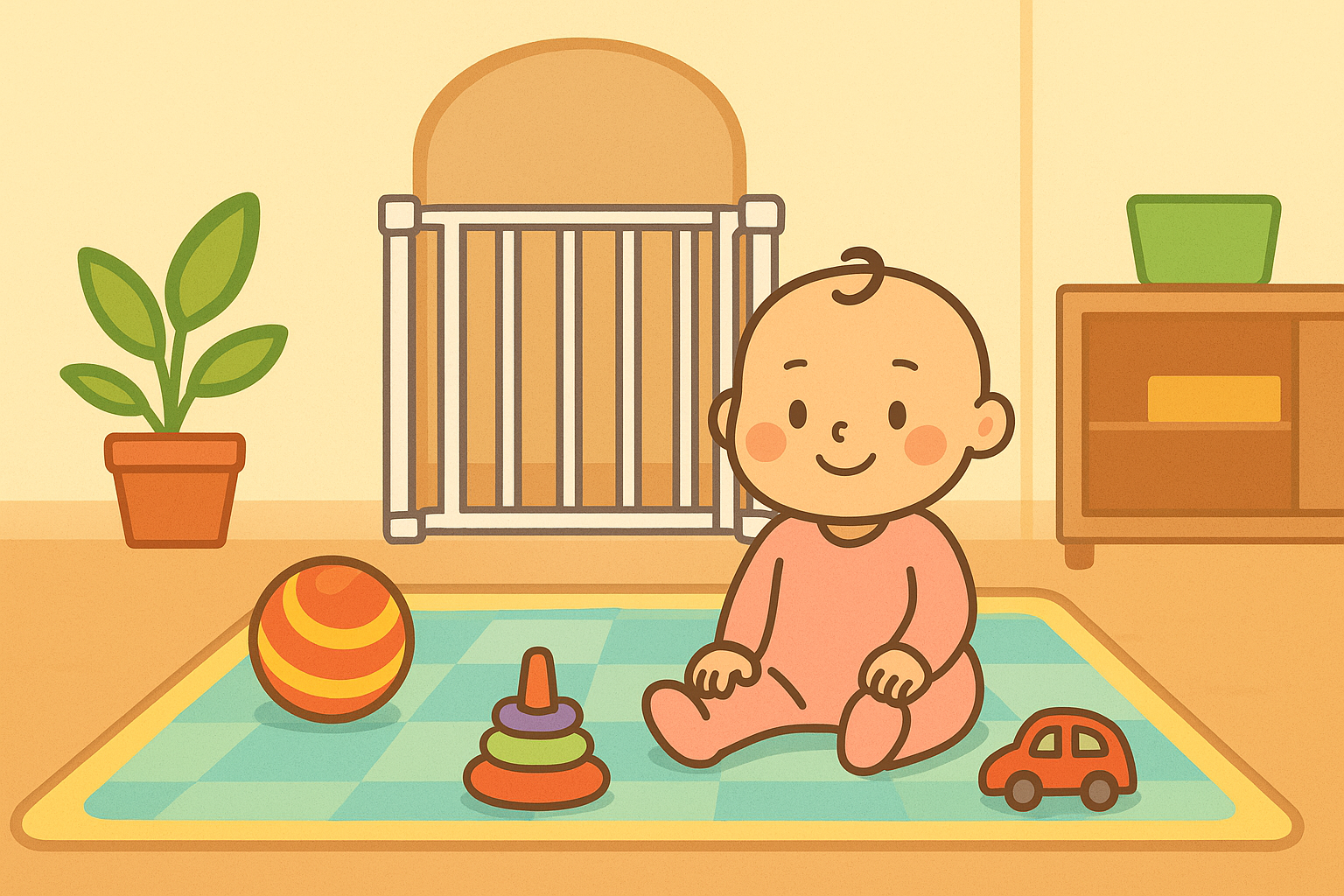
One of the first and most important things is to create a safe, designated play area where your little one can explore freely. It could be a corner of the living room, a well-organized nursery, or just a small section of the apartment. Use a thick, soft play mat, pillows, and age-appropriate toys – anything they can safely touch, throw, or chew on. Always use outlet covers, corner protectors on furniture, and non-slip pads under small rugs. Stable furniture is essential, because babies quickly start pulling themselves up, and it’s important that they have something safe to hold onto. Tablecloths and dangling cords, on the other hand, are better tucked away so they don’t pull anything down on themselves.
Anything dangerous should be put away early on. Medicines, cleaning products, sharp objects, small or breakable items should all be stored high up or in locked cupboards. Childproof locks on drawers and cabinet doors are worth installing, because curiosity knows no limits – if it’s reachable, your child will try to reach it. A great trick is to inspect your home from your child’s point of view: crouch down and look around from their height. You’ll be surprised by how many things suddenly look exciting – and accessible.
Many families find baby gates or playpens helpful. Some parents worry they feel too restrictive, but in reality, they can be a lifesaver. In our home, the kitchen became a particularly dangerous zone when I was cooking – a hot oven, steaming pots, and plenty of fascinating “no-touch” objects. So I’d simply put my little one in the playpen, bring a few favorite toys, and while I cooked, they happily played in their own little world. It gave us both peace of mind – they were safe, and I could focus without constant worry.
Later, when my baby started learning to stand, the playpen took on a new role. They held onto the sides, practiced balancing, and took their first little steps safely inside it. It was such a joy to watch them grow without fearing a fall or a toppled chair. Those everyday moments really taught me how much difference a well-thought-out, safe space can make.
Houseplants also become something to reconsider once your baby starts crawling and exploring. Many common plants look beautiful but can be poisonous if a child chews on the leaves. Poinsettia, oleander, ficus, croton, philodendron, and dieffenbachia are just a few examples. It’s best to place those high up or switch to non-toxic plants like ferns, spider plants, or snake plants. Potting soil is another irresistible thing for babies – they love to dig and scatter it everywhere. It’s safest to move the plants out of reach for a while or secure them so they can’t be knocked over.
As your baby starts pulling up and learning to walk, a new stage begins. Watching their motor skills develop is amazing but also a bit nerve-racking. Make sure anything they hold onto is sturdy and won’t tip over easily. Put lightweight chairs, small tables, and rolling furniture away for now. It’s also a good idea to fix shelves to the wall, use soft silicone corner guards, and move heavy objects lower down so nothing can fall on them. And if they do fall – don’t panic. Soft rugs, padded play mats, and safe play areas make a huge difference.
Hygiene is also part of safety. Babies touch everything and often put their toys in their mouths. It’s important to clean and disinfect toys regularly – no need to overdo it, but consistency matters. Make handwashing a daily habit, especially after playing with dirt, water, or modeling clay. Always store cleaning products out of reach, and whenever possible, choose natural alternatives like vinegar or baking soda – they’re gentle but effective. Many brands now offer baby-safe cleaning products too, which makes things even easier.
As your child grows, simple rules become just as important as physical safety. Short, clear, consistent boundaries help them understand limits. For example, in our home, we have a rule: “You can only go into the kitchen with Mom.” When they were younger and couldn’t understand that yet, I used a baby gate to keep them out. Children thrive on consistency – if your reactions are predictable, they quickly learn what to expect. Praise, patience, and consistency go much further than constant “no’s” – that’s how real security is built.
There’s no such thing as a perfectly safe home – there will always be something you forget or didn’t think about. But with love and mindfulness, you can create a space where your child can grow safely. The goal isn’t to protect them from everything, but to teach them how to explore the world safely. A few clever safety tools, a bit of awareness, and a lot of patience – that’s all it takes for everyday life to feel calmer and for exploration to remain joyful.