Healthy Lifestyle for Kids: Practical Tips for Everyday LifeHealthy Lifestyle is Essential for Children’s Development
A healthy lifestyle is essential for children’s development. For this, sufficient physical activity and proper nutrients are necessary.
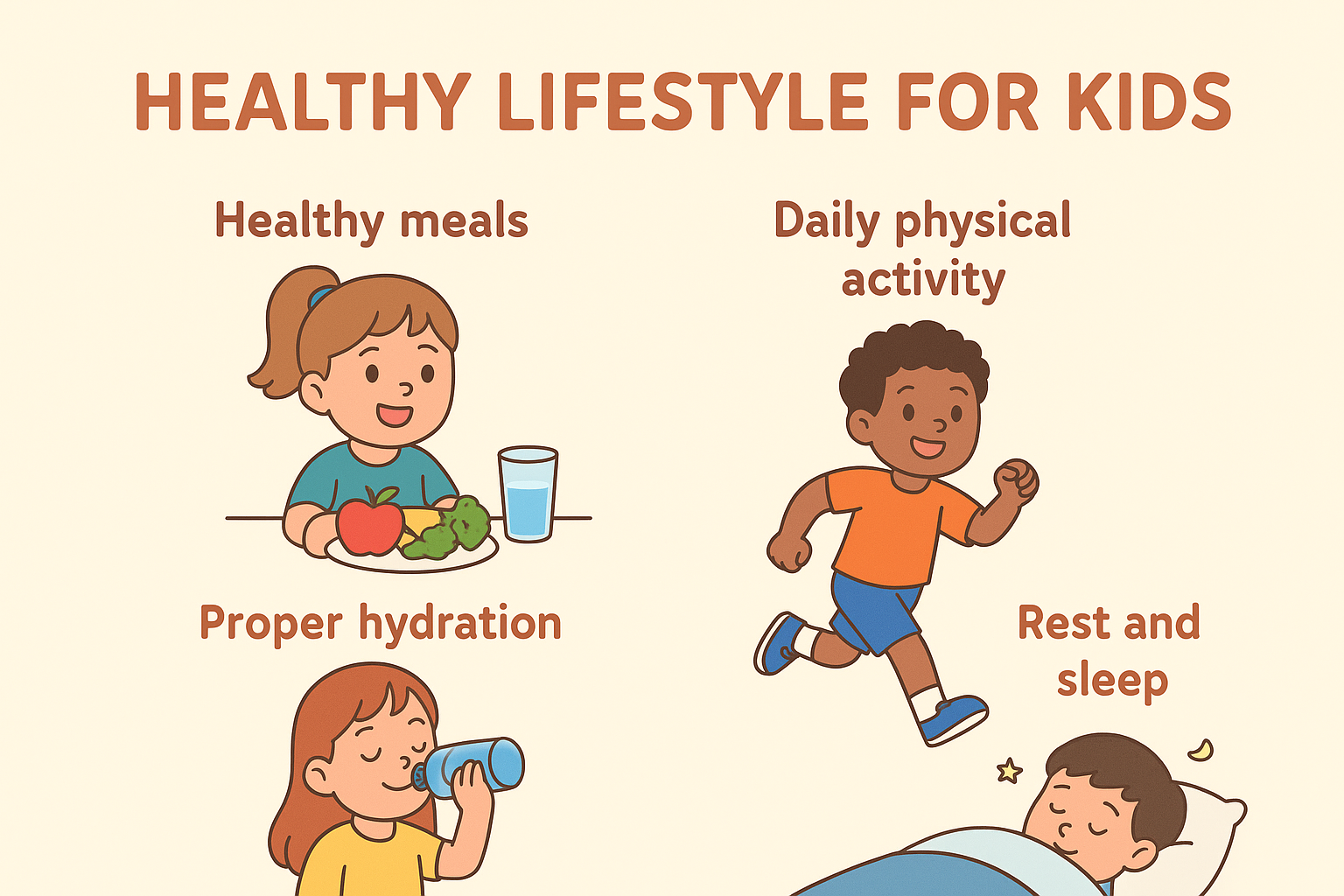
1. Healthy Breakfasts and Meals
Breakfast is the most important meal of the day. It gives children the energy they need. In today’s fast-paced world, it is worth looking for quick and healthy recipes.
Tips for everyday routines:
- Whole grains: Oatmeal, whole wheat bread, or muesli provide long-lasting energy.
- Fresh fruits and vegetables: Apples, bananas, berries, cucumbers, or bell peppers — they are full of vitamins.
- Simple protein sources: Eggs, yogurt, cheese, chicken breast ham.
I shared some recipe ideas in one of my previous blog posts: https://letsgonatasa.com/5-healthy-and-easy-breakfasts-for-kids/
2. Daily Physical Activity
It is good for children to spend a lot of time outdoors and to be active. They have much more energy than adults, so it is often difficult to keep up with them. Still, it is worth incorporating physical activity into everyday life, even a walk in the park, cycling, or visiting the playground. We often coordinate with the mothers of my daughter’s friends so that we all go out together. During this time, the children run and play together, and we don’t get bored either because there is someone to talk to. Even walking or cycling to school or kindergarten with your child counts as good exercise.
3. Hydration
It is often difficult to get children to drink water. At least in our case, it is quite challenging, so we often solve sufficient hydration in a playful way. We compete to see who drinks their glass of water first. Of course, this is done slowly to avoid choking. When I drink, I also pour half a glass of water for my child, and we sip it together.
Tips:
- Amount: Younger children should drink 5–6 glasses per day, older children 7–8 glasses.
- Avoid sugary drinks: They can damage children’s teeth, and if they always receive soda, they won’t appreciate water as much, and it may fill them up.
- Motivation: Colorful cups, fun straws, or personal water bottles can encourage regular drinking.
4. Rest and Sleep
Adequate sleep is essential for physical development, attention, mood, and the immune system.
Tips:
- Sleep needs: Toddlers need 10–12 hours, school-aged children 9–11 hours of sleep.
- Evening routine: It is easier to maintain the usual routine, so the child knows what to expect. In our case: after dinner, about fifteen minutes of TV, then we go for a bath. After bathing, a little shared play and conversation, then bedtime story (from a book) and sleep.
- Screen-free time: Before going to bed, we avoid screens. In our household, there are no screens 1–1.5 hours before sleep.
5. Simple Healthy Habits
Everyday small habits shape children’s lives and form the foundation for a healthy lifestyle in the long term.
Tips:
- Hygiene: Wash hands before and after meals, brush teeth in the morning and evening.
- Tidying up: Involve children in putting away their toys — it develops responsibility and organizational skills. In our case, this works best as a game. We compete: while I wash the dishes, can my child clean up their toys in the same time? This way, we avoid arguments.
- Independence: Give small tasks (for example, pouring water, cutting fruit) to increase their confidence and skills.
6. Vitamins
I would not call this mandatory, but if we feel the child does not get enough vitamins from food, we can supplement.
Omega-3 fatty acids: Important for brain development and heart health. They support learning and memory functions.
Vitamin C: Strengthens the immune system. Very helpful during cold weather and at the beginning of school/kindergarten.
Vitamin D: Helps with calcium absorption, which is essential for the health of bones and teeth.