Teaching Emotions Through Play: How Games Help Kids Understand Their Feelings
Recognizing and expressing emotions is such an important skill for children. Even from a young age, it has a big impact on how they handle relationships, communicate, and solve problems. But many kids find it hard to put their feelings into words, especially when emotions are strong or complicated. Play is a perfect, natural, and fun way for children to explore their feelings and practice expressing them.
Puppets and Figurines: Learning Through Play
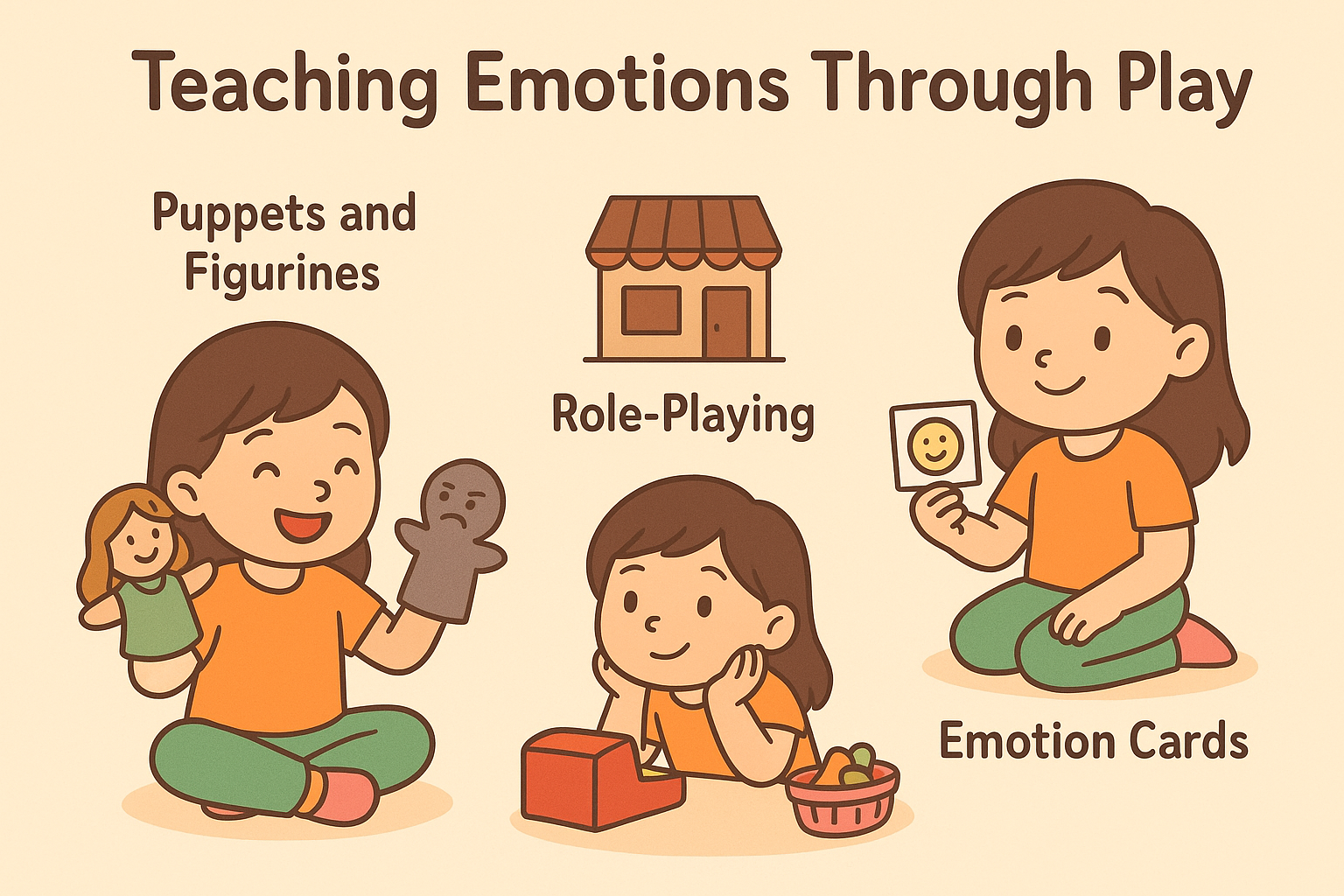
Puppets or small figurines are great tools to help kids recognize emotions. You don’t need actual puppets – plush toys or little figures work perfectly too.
For example:
- A puppet can be angry, sad, or happy.
- Kids can observe and name the emotion without having to express their own feelings directly.
This is especially helpful for shy or hesitant children. Puppetry also develops imagination, creativity, and speaking skills.
Tip: Ask your child to create stories with the figures that involve emotions. You can ask, “How does your puppet feel now?” – this encourages reflection in a playful way.
Role-Playing: Experiencing Emotions
Role-playing lets kids step into different situations, real or imaginary. For example, during a “store” or “doctor’s office” game, they might experience:
- Waiting or feeling disappointed
- Joy and excitement
- Frustration or sadness
Role-play helps children notice how others react to emotions and practice expressing their own feelings in a safe space. It also develops social skills, empathy, and problem-solving.
Tip: Rotate roles often so your child can explore different perspectives and emotions.
Emotion Cards: Words and Faces
Emotion cards are a fun way to help children put feelings into words. Cards can include:
- Facial expressions
- Emotion words or moods
- Situational prompts
Activity ideas:
- Act out the emotion shown on the card
- Guess how another child is feeling based on their expression
- Talk about situations that can trigger similar feelings
Tip: Celebrate all attempts to express emotions, even if they’re not perfect! If you also share how you feel – happy, sad, or frustrated – your child can better recognize and understand other people’s reactions.
Everyday Emotional Play
Emotional learning doesn’t have to be a special activity. You can include it in daily life:
- Morning play: Start the day with a short puppet skit or role-play.
- Family time: Play simple emotion games during meals or car rides.
- Story-based play: After reading a story, ask how the characters might feel and act it out.
Short, regular, fun activities help develop emotional intelligence and strengthen family bonds.