Why Music and Movement Are Great for Kids
If there’s something that can both entertain and help kids grow, it’s music and movement. It’s not just play – it’s actually an amazing tool for little brains to develop. When kids jump, clap, dance, or simply move to the rhythm, different parts of their brain work together: movement, speech, and thinking all get activated. And the really wonderful part is that they do all this while having a blast – learning and having fun at the same time, without even realizing it.
Movement Every Day
Movement is essential in a child’s life. Big movements – running, jumping, spinning – and fine movements – like hand gestures or handling objects – are both important. These skills aren’t just useful for sports, but also for everyday activities like dressing, eating, playing with toys, and later on, for sports and creative activities.
It’s easy to bring movement into your home. For example, we often set up a mini obstacle course in the living room: jumping between cushions, rolling on the carpet, climbing on the couch (safely, of course!).
We also do simple exercises at home together: arm circles, squats, jumps. First, I come up with the exercises, then she does too. She loves inventing her own moves, and when I try to copy her, she often laughs – it makes the exercise really fun. And honestly, it’s a great way for me to get a little exercise too.
Rhythm and Focus
Developing a sense of rhythm is super important – it teaches kids to notice patterns in time and follow sequences.
Home ideas:
Clap-along game: Play a favorite children’s song and clap along to the rhythm. Later, you can create your own dance moves together.
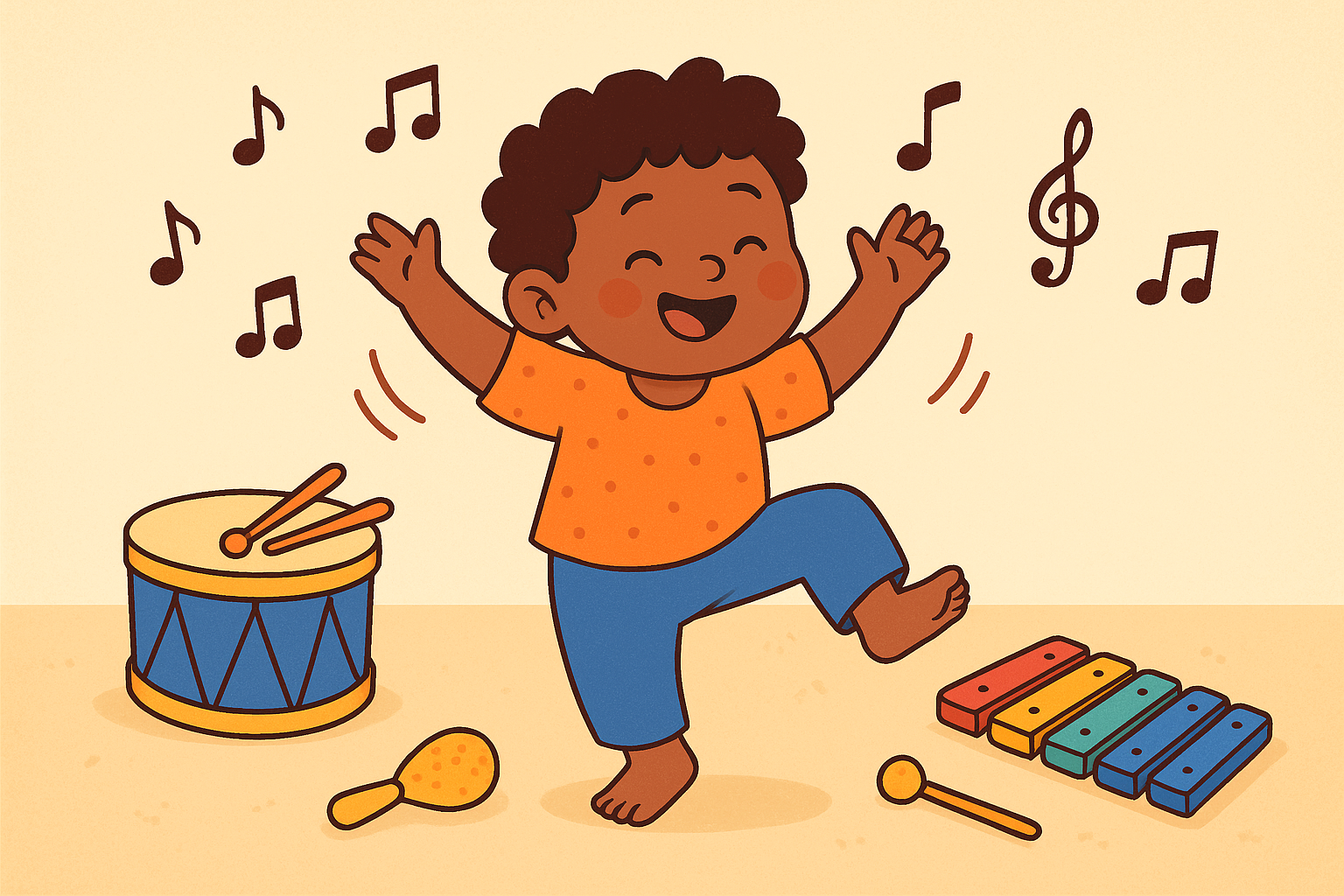
Trying instruments: Drums, shakers, xylophones – the more you try, the more fun it is. The child gets to explore a variety of sounds. At our house, the flute and drumming on different objects are always a hit.
Combine movement and rhythm: Assign a movement to each beat – clap, tap, stomp – so the child both sees and hears the rhythm.
A few more tips for home:
Learn short songs and repeat them with movements. At our home, many of the songs she learns at preschool include actions, and she loves teaching them to us – so we get another fun, active activity together.
The most important thing is to keep it playful and joyful. Kids learn best through play, and when music and movement are part of the fun, they’re learning without even realizing it.