Screen Time for Kids: How Much is Just Right?
These days, it’s almost impossible to avoid screens — tablets, phones, and computers are everywhere. I often get questions from parents (and ask them myself too): How much screen time is okay for kids? How do we find that balance where it’s not harmful, but maybe even useful?
Why Screen Time Needs Balance
A child’s attention, imagination, and development all depend on what fills their days. And while digital games can sometimes get a bad reputation, they can actually be great — if used wisely. Many of them help develop logic, memory, and problem-solving skills.
Still, it’s important to remember that nothing replaces outdoor play, real movement, and time spent with family. I always try to make sure screens don’t steal the time we could spend drawing, baking, or playing hide and seek.
It also matters what children watch or play. On my website, I share some educational and age-appropriate games that can be enjoyed safely. It’s worth finding platforms designed for kids — this way, you don’t have to constantly check over their shoulder to see what’s on the screen.
How Much Screen Time is OK?
Of course, every child is different, but here are some general guidelines that have worked for us:
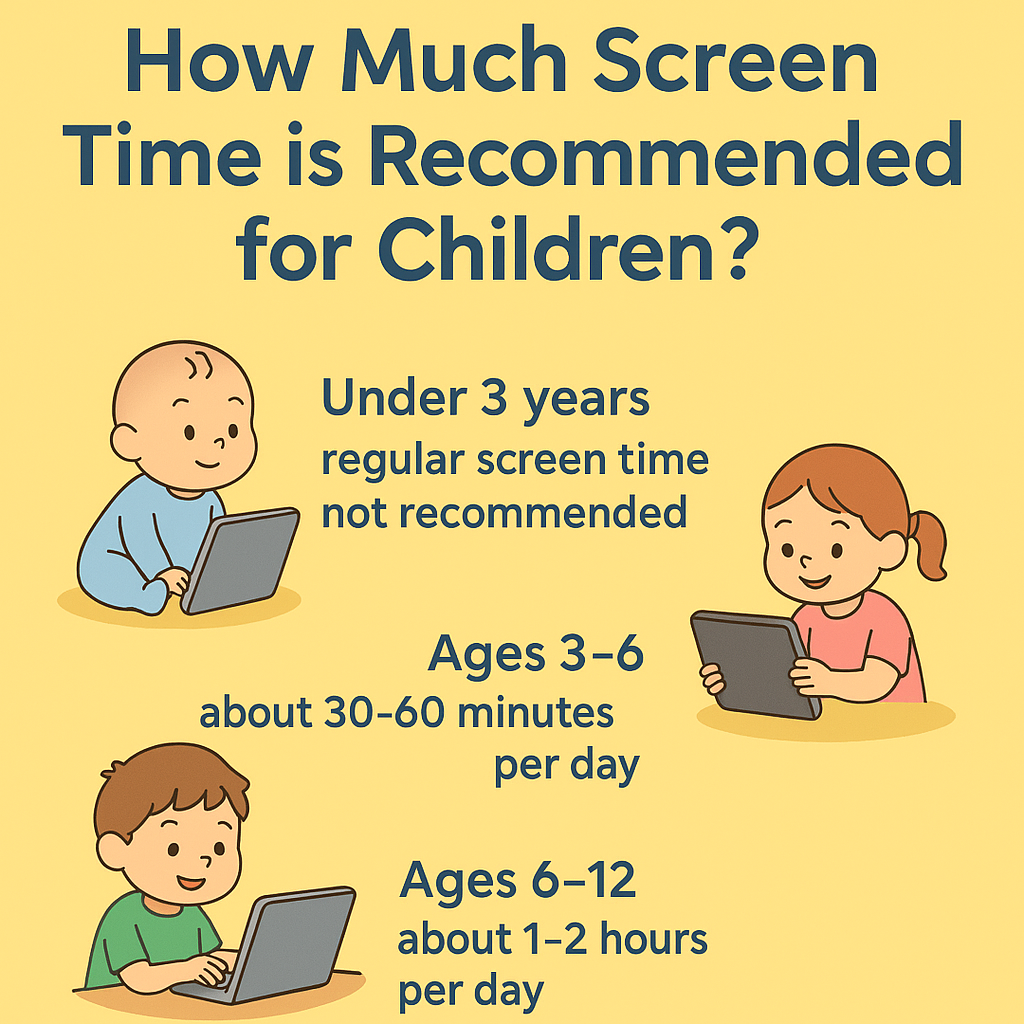
- Under 3 years: Very little screen time, and only together — maybe a short cartoon or story before bed.
- Ages 3–6: Around 30–60 minutes a day, ideally broken into small chunks.
- Ages 6–12: Up to 1–2 hours, balanced with active play and outdoor time.
These aren’t strict rules, just helpful reference points. Honestly, it’s nearly impossible to follow them perfectly every day — and that’s okay. What really matters is that screens don’t replace play, learning, or family time.
Making Screen Time More Meaningful
Instead of banning screens completely, we can turn them into something positive.
Here are a few ideas that work well for us:
- Choose calm, age-appropriate stories instead of loud or overstimulating shows.
- Play or watch together. It’s more fun and gives you something to talk about afterward.
- Discuss what they’ve seen. Ask questions like “What did you like about that?” or “What do you think will happen next time?”
- Set clear routines. At our home, screen time comes after dinner and bath — about 20 minutes of cartoons before bedtime. It makes things predictable, and there’s no arguing about when it’s allowed.
In Summary
Screens are part of modern life, and that’s okay. The goal isn’t to ban them, but to use them thoughtfully. With moderation and a bit of planning, screen time can be educational, fun, and even bonding.
When we pay attention to how much time kids spend — and what kind of content they see — screens can complement, not replace, the real joys of childhood: play, imagination, and time together.